Businesses not yet feeling the effect of reforms, as confidence drops – BLSA



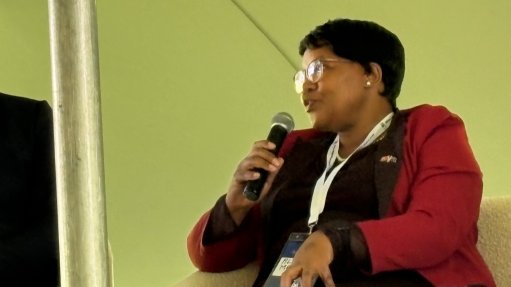
Businesses are unfortunately not yet feeling the impact of structural reforms on the ground, with felt progress important in the move toward a new operating environment in which electricity is priced through competitive markets and logistics services can be accessed through multiple operators, says business organisation Business Leadership South Africa (BLSA) CEO Busisiwe Mavuso.
“Only when we have fully functioning and competitive markets for electricity and logistics services will business sentiment respond; when companies start to see their input costs falling and service reliability improving, they start to build confidence.
“This is still a way to go to turn reform into a real improvement in the operating environment,” she says.
The Rand Merchant Bank/Bureau for Economic Research Business Confidence Index, released on September 2, fell one point to 38 in the third quarter, from the second quarter, which indicates generally negative sentiment, with 62% of respondents dissatisfied with prevailing business conditions.
This is down significantly from the reading of 47 in the first quarter.
There are plenty of signs that reform is moving forward, but business confidence is far behind, says Mavuso.
National Treasury, through the Development Bank of Southern Africa, has issued a request for proposals (RFPs) for advisers on the unbundling of State-owned utility Eskom's transmission assets into an independent transmission system operator, which is a significant step.
The transaction is complex, and will require the approval of Eskom's lenders, but such restructurings have been successfully concluded in many countries, and there is substantial international experience to draw on, Mavuso points out.
The timetable set out in the RFP is ambitious, with the transaction set to be concluded in the next 18 months.
While the plan has faced resistance in some quarters, BLSA and Eskom fully support the electricity reform programme and the process toward unbundling can now accelerate, says Mavuso.
Eskom’s lenders are willing to engage to find workable solutions. Treasury’s advisers will have an important role to play in aligning those role players and designing a transaction that works for everyone. BLSA will play its part in supporting all role-players to achieve that outcome. It is critical to establishing the foundations of growth in South Africa's economy.
Further, an update on progress with the rail network statement was provided by the Department of Transport (DoT). The network statement is a crucial document that sets out how private operators can access the national rail network.
It is important for the logistics reform process and has the potential to unlock billions of new investment in rolling stock and rail infrastructure. The DoT will publish the final statement at the end of September.
This is behind schedule, but better a high-quality network statement that works than meeting a deadline with something that does not work, Mavuso says.
“Logistics and electricity are growth enablers. They are the preconditions for the investment that will drive growth toward our more than 3% target and the job creation that would follow.”
TRADE ADVANCES
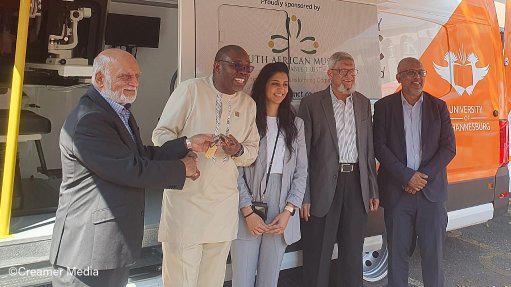
On the trade front, an agreement was signed between the India Commonwealth Trade Council and the India South Africa Chamber of Commerce. Improved trade relations are important for the business outlook, says Mavuso.
South Africa does not have a coherent trade strategy. India is an example of a much more coherent strategy, and has 14 signed free trade agreements, compared with the seven agreements and customs union arrangements South Africa has, she says.
India also has six preferential trade agreements when South Africa has one.
“We have had lengthy stop-start engagements with India on trade opportunities, and perhaps this agreement will support progress toward a mutually beneficial outcome.”
Further, the two-year extension of the African Growth and Opportunity Act is welcome, but is too short to materially shift investment in South Africa, which would require much longer visibility, she says.
Article Enquiry
Email Article
Save Article
Feedback
To advertise email advertising@creamermedia.co.za or click here
Projects
Latest Multimedia
Latest News


Showroom

Multotec, recognised industry leaders in metallurgy and process engineering help mining houses across the world process minerals more efficiently,...
VISIT SHOWROOM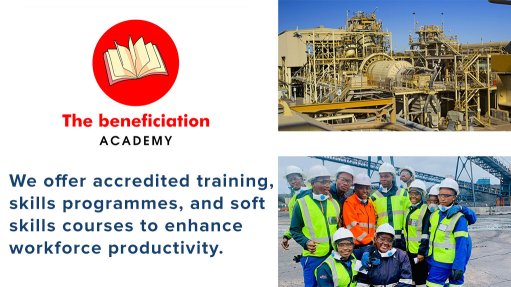
The Beneficiation Academy is a certified training institution that follows all compliance legislation and is accredited with various Sector...
VISIT SHOWROOM


Press Office
Announcements
What's On
Subscribe to improve your user experience...
Option 1 (equivalent of R125 a month):
Receive a weekly copy of Creamer Media's Engineering News & Mining Weekly magazine
(print copy for those in South Africa and e-magazine for those outside of South Africa)
Receive daily email newsletters
Access to full search results
Access archive of magazine back copies
Access to Projects in Progress
Access to ONE Research Report of your choice in PDF format
Option 2 (equivalent of R375 a month):
All benefits from Option 1
PLUS
Access to Creamer Media's Research Channel Africa for ALL Research Reports, in PDF format, on various industrial and mining sectors
including Electricity; Water; Energy Transition; Hydrogen; Roads, Rail and Ports; Coal; Gold; Platinum; Battery Metals; etc.
Already a subscriber?
Forgotten your password?
Receive weekly copy of Creamer Media's Engineering News & Mining Weekly magazine (print copy for those in South Africa and e-magazine for those outside of South Africa)
➕
Recieve daily email newsletters
➕
Access to full search results
➕
Access archive of magazine back copies
➕
Access to Projects in Progress
➕
Access to ONE Research Report of your choice in PDF format
RESEARCH CHANNEL AFRICA
R4500 (equivalent of R375 a month)
SUBSCRIBEAll benefits from Option 1
➕
Access to Creamer Media's Research Channel Africa for ALL Research Reports on various industrial and mining sectors, in PDF format, including on:
Electricity
➕
Water
➕
Energy Transition
➕
Hydrogen
➕
Roads, Rail and Ports
➕
Coal
➕
Gold
➕
Platinum
➕
Battery Metals
➕
etc.
Receive all benefits from Option 1 or Option 2 delivered to numerous people at your company
➕
Multiple User names and Passwords for simultaneous log-ins
➕
Intranet integration access to all in your organisation